
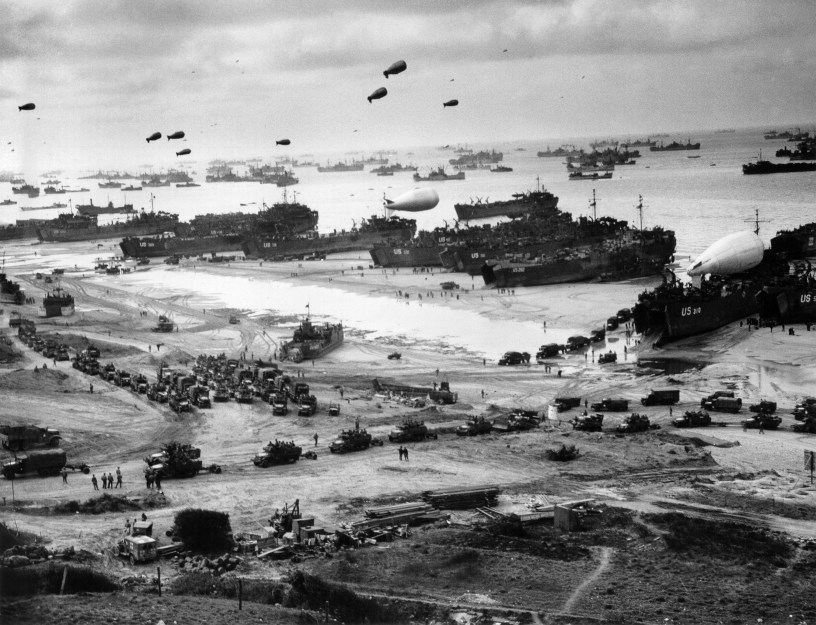
The Normandy D-Day invasion on June 6, 1944, was a pivotal event during World War II, which had first-of-its-kind statistics. By the end of June 11, 1944, 326,547 troops, 54,186 vehicles and 104,428 tons of supplies had been landed on the beaches. The plan and execution to keep this amount of materiel moving with the troops was a logistical feat like nothing ever done before or since.
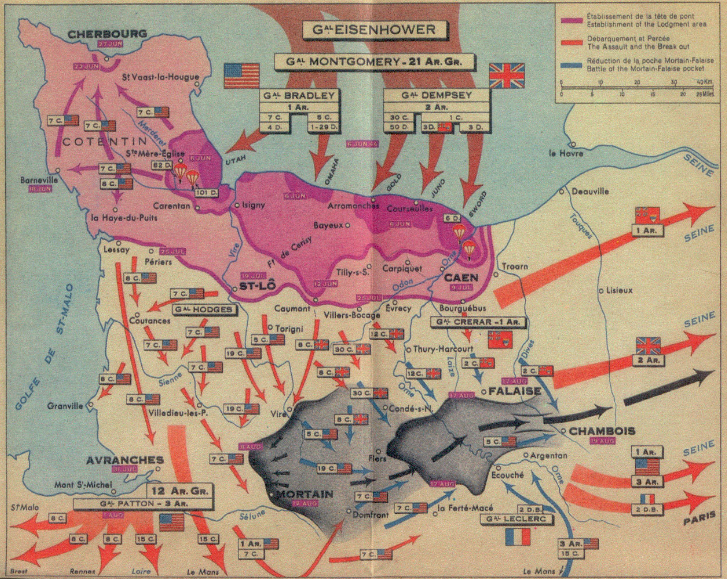
Allied Plan for the Normandy Invasion (D-Day)
Here are some statistical aspects that highlight the importance of this historic military operation:
- Scale of the Invasion: D-Day involved the largest amphibious assault in history. Over 156,000 Allied troops from the United States, United Kingdom, Canada, and other nations were involved in the invasion. The sheer magnitude of the operation demonstrated the unprecedented scale of military coordination and resources required.
- Number of Ships and Aircraft: The invasion utilized a massive fleet of ships and aircraft. On D-Day, over 5,000 ships and 11,000 aircraft were involved in the operation. The numbers reflect the extensive logistical efforts and resources invested in the invasion, emphasizing the commitment and determination of the Allied forces.
- Casualties and Losses: D-Day resulted in significant casualties, but the successful outcome was crucial to the Allied victory. The number of casualties varies across sources, but estimates suggest that on D-Day alone, the Allies suffered approximately 10,000 casualties, including over 4,400 deaths. These numbers highlight the sacrifices made by the soldiers and the heavy toll of the invasion.
- Breakthrough and Allied Advances: The success of the D-Day invasion led to a breakthrough in the Atlantic Wall, the fortified German defenses along the French coast. The invasion opened a second front in Western Europe, allowing the Allies to gain a foothold and begin their advance. Within a week, the Allies had established a significant beachhead and started to push inland, leading to the liberation of France and the eventual defeat of Nazi Germany.
- Turning Point in World War II: The D-Day invasion marked a turning point in World War II. It provided the Allies with a strategic advantage, enabling them to regain momentum in the war. The invasion shattered Hitler’s plans and forced the German forces to fight a two-front war, diverting crucial resources away from the Eastern Front, where the Soviet Union was already pressuring German forces. This turning point eventually led to the Allied victory in Europe.
While these statistics provide insights into the significance of the D-Day invasion, it’s important to remember that behind these numbers lies the bravery, sacrifice, and determination of countless individuals who participated in this historic event.
Today, the planning and execution of the efforts from well before June 6, 1944, thru VE Day on May 8, 1945, would be unachievable without all the technical advances in automation, software and vastly different delivery mechanisms. The sheer strength of human determination to execute D-Day and beyond was a masterful effort and was as much a contribution to the success of the operation as any other factor that led to the victory.
 michaelfhotchkiss renaissanceman